19
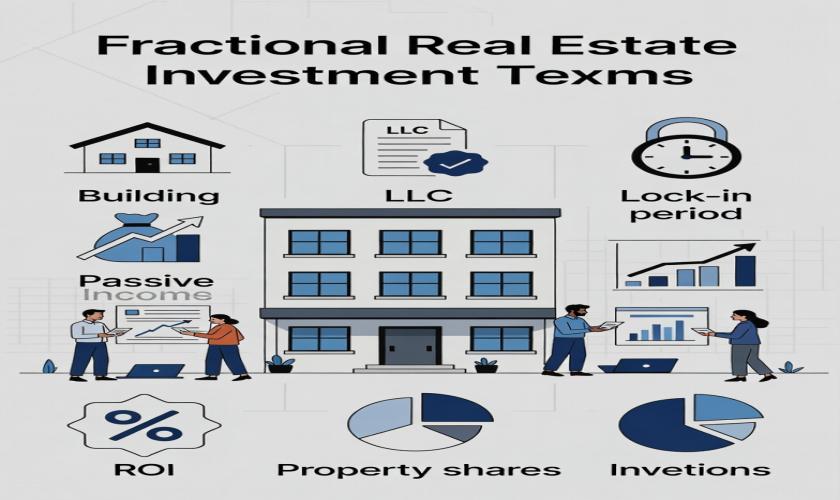
DecCommon Fractional Real Estate Terms Every Investor Should Know
Fractional real estate investing in the United States is a growing way for beginners and experienced investors alike to get exposure to property without buying it outright. But if you’re new to this type of investing, the terminology can feel confusing.
Understanding the key terms in fractional real estate is essential for making smart investment decisions, evaluating platforms, and tracking your returns.
This guide breaks down the most important terms every U.S. investor should know, explained in simple, beginner-friendly language.
1. Fractional Ownership
Fractional ownership refers to your share of a property. Instead of owning the entire property, you purchase a portion—usually expressed as a percentage or number of units. Your returns, including rental income and appreciation, are proportional to your ownership.
2. LLC (Limited Liability Company)
Many fractional real estate investments in the U.S. are structured as LLCs. The LLC legally owns the property, and investors own membership shares in the LLC. This structure helps protect individual investors from liability and simplifies management.
3. Platform / Sponsor
A platform or sponsor is the company that manages the fractional investment. They handle property management, financial reporting, compliance, and investor relations. Choosing a reputable platform is critical to minimize risk.
4. Capital Contribution
A capital contribution is the amount of money you invest to purchase your fractional ownership in a property. This is the initial investment that gives you legal rights to the property’s income and appreciation.
5. Passive Income
Passive income refers to the money you earn without actively managing the property. In fractional real estate, this typically comes from rental payments distributed proportionally to investors.
6. Appreciation
Appreciation is the increase in the property’s value over time. Investors benefit from appreciation when the property is sold or revalued, proportionally to their ownership stake.
7. Liquidity / Lock-In Period
Fractional real estate investments are less liquid than stocks or REITs. Many platforms require investors to hold their shares for a set period, called the lock-in period, before selling or exiting.
8. ROI (Return on Investment)
ROI measures the profitability of your investment. In fractional real estate, ROI includes both rental income and property appreciation, minus fees and expenses, calculated relative to your initial capital contribution.
10. Diversification
Diversification means spreading your investment across multiple properties or markets to reduce risk. Fractional real estate makes it easier for U.S. investors to diversify without needing large sums of money.
Final Thoughts: Why Learning the Terms Matters
Understanding fractional real estate terminology is crucial to becoming a confident investor. Knowing what terms like LLC, passive income, appreciation, and lock-in period mean helps you:
Make informed investment decisions
Evaluate platforms and deals
Communicate effectively with sponsors and other investors
If you’re serious about investing in U.S. fractional real estate, mastering these terms is your first step toward smarter, safer investments.